Leading People Through AI Anxiety, Budget Pressure, and Constant Change

People Leadership in the Digital Era: Leading Through Complexity and Fostering a Future-Ready Workforce

The most interesting conversations about AI in government right now are not about tools. They are about people.


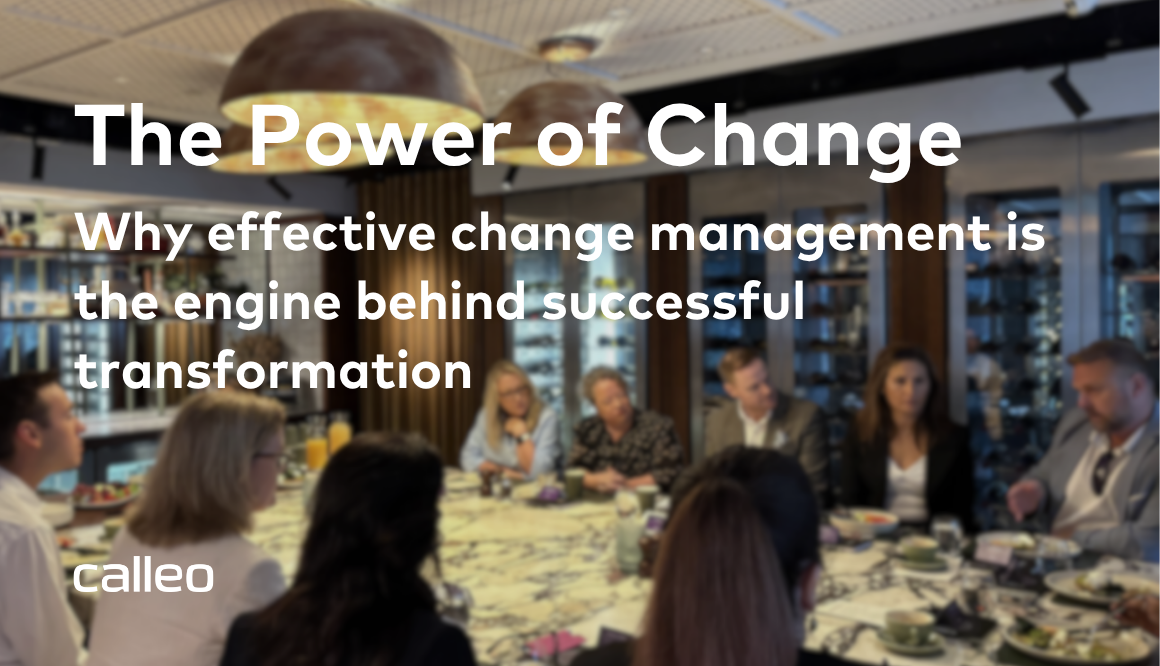
At Government Innovation Week’s session on people leadership, the panel kept circling the same reality: AI, budget cuts, and rising public expectations are colliding. Staff are anxious, leaders are under pressure, and citizens expect better services, not excuses.


Calleo’s General Manager, Gavin Campbell, joined senior leaders from an Australian federal agency and a Canadian central agency to talk about what leadership actually looks like inside that tension.


Change Is Emotional Before It Is Operational

One of the strongest themes was that change management is not a slide deck problem. It’s emotional.


Leaders spoke about staff quietly asking what AI means for their jobs, especially in back-office roles. Informal conversations in kitchens and corridors are where the real sentiment appears: fear of losing relevance, frustration with “yet another change”, confusion about what the future looks like.


The panel agreed that pretending this emotion does not exist is the fastest way to lose trust. Good leaders name it. They acknowledge that people react differently to the same shift. Some run toward new tools. Others resist a minor process tweak.


Treating everyone as if they sit in the same place on that spectrum is lazy leadership. The better approach is simple: listen first, adjust your message and support for each group, and keep the conversation going.


Change lands very differently when staff feel seen rather than managed.


Tell the Truth Early

The Canadian example struck a cord. Their federal budget includes tens of billions in cuts and a reduction of around 40,000 public servant roles over five years, with AI efficiency framed as part of the answer. It's not hard to see why staff draw a straight line between “more AI” and “fewer jobs”.


An Australian leader shared a more targeted picture: using AI to strip out manual work in resourcing, for example, by automating candidate kit creation to save time and cost. That shift did not cost jobs, but it did change work.


The lesson was that if leaders do not connect the dots, staff will do it for them. And they will often assume the worst (naturally).


So the panel pushed a simple discipline:

      Be clear about where AI is being used and why.

      Be honest about constraints, including funding and headcount pressure.

      Do not oversell AI as magic or pretend it is not linked to efficiency.


Done well, this honesty does not kill morale. It builds it. People cope better with hard news than with spin.


Guardrails First, Experiments Second

Across both countries, the leaders agreed that AI adoption without guardrails is a trust problem waiting to happen.


One Australian agency has already set clear AI and data policies, with defined “safe zones” for experimenting. Legacy systems stay isolated from new AI tooling. Staff use AI to remove low-value work first, not to touch high-risk or citizen-facing decisions.


In Canada, a federal AI strategy is being rolled out with one specific aim: help smaller agencies that do not have large digital teams.


Shared solutions, such as a central translation model built on decades of government language data, mean not every agency needs to build its own tools from scratch. Agencies are encouraged to start with small, low-risk irritants rather than core services.


Gavin stressed that governance is not a blocker in this environment, it is the entry ticket. Without clear risk and policy frameworks, staff will either refuse to use AI or use it in ways that make leaders nervous.


AI becomes far less scary once people can see the lines and work inside them.


Resourcing, Human Contact, and Where AI Stops

Resourcing was a useful test case. One agency has fully replaced manual creation of candidate information packs with AI, freeing teams to spend time on the actual hiring decision instead of repetitive formatting. That is AI at its best: remove admin, keep the human judgment.


But the panel also talked about experiments that did not land well, like AI-driven phone calls that caused candidates to disengage. Gavin was clear that this is where resourcing leadership has to draw a line. High-touch moments need a human voice.


The same applies to service delivery. When citizens are dealing with bankruptcy, insolvency, or other life-changing situations, a call centre is the channel that keeps trust intact.


The pattern is simple: use AI to strip out background friction, not to dodge the moments where people need human empathy.


Building Leaders Before Building Tools

You simply cannot build a future-ready workforce if leaders do not understand the tools and risks themselves.


The Canadian Digital Academy does not try to turn senior executives into technologists. Instead, it teaches them enough to ask the right questions, understand trade-offs, and challenge vendors and internal teams when needed.


In Australia, agencies are taking a similar view:

      Train leaders first on what AI can and cannot do.

      Roll out short, practical guidance (one-page do/do not summaries) instead of dense policy.

      Use early adopters and champions to pull their peers along, not rely on one-off training days.


Gavin stated that if leaders are not using the tools themselves, nobody else will believe the message. Staff watch what leaders do more than what they say.


The skills challenge is not just technical. Yes, data literacy, security, and risk management came through as core capabilities for the next decade. But so did curiosity, resilience, and critical thinking.


The panel also talked about a growing generational trust gap. Younger citizens face higher costs for education and housing and expect clear value from the taxes they pay. They are more willing to question whether the government is delivering.


For public sector leaders, that lands as a simple challenge:

      Prove value through better services, not just better messaging.

      Invest in staff skills so they can keep improving those services.

      Treat trust as the main long-term asset, not a “soft” concern.


This shows up in practical choices: investing in .gov.au visibility so accurate information surfaces first, building digital ID and authenticated portals, and keeping non-digital channels open so nobody is locked out.


Modernisation that leaves people behind will only create a trust problem.


Technology Is the Tool. Leadership Does the Work.

The session closed on a point that cuts across all of Government Innovation Week. AI, cloud, and automation are tools. They do not set vision, calm fears, or rebuild trust after a failure. Leaders do that.


For Gavin, the opportunity is clear:


“If we get leadership and guardrails right, AI stops being a threat and becomes a way to give people better work and citizens better services.”


At Calleo, this is the lens on every project: capability, culture, and trust first, tools second.


If your agency is wrestling with AI, skills, and staff anxiety at the same time, talk to us about how we can help you align people, policy, and technology so change actually sticks.

by Dom Jennings 23 November 2025
Doing More With Less: How Public Sector Leaders Are Rethinking Digital Transformation
Navigating the Skills Shortage
by David Bain-Smith 23 November 2025
How government agencies can attract, retain and grow digital talent through collaboration, mobility, shared capability and a compelling purpose-driven APS brand.
David Bain-Smith presenting at the ACS Leadership Breakfast event in Canberra.
30 October 2025
Leadership drives true productivity. At the ACS Leadership Breakfast, experts showed how trust, adaptability, and culture power performance beyond technology.
Calleo team celebrating their ESG Award win and finalist recognition at the APSCo Awards 2025
by Iris Lamers 29 October 2025
Calleo wins the ESG Award and is named a finalist for Candidate Experience at the APSCo Awards 2025, recognising our leadership in ethical workforce solutions.
by Dom Jennings 4 September 2025
As the adoption of AI and cybersecurity technology accelerates, so too does the need for a workforce, policy environment, and infrastructure that can support it.
by Dom Jennings 20 May 2025
Cyber Summit 2025 – A New Era of Cyber Threats
by Gavin Campbell 26 March 2025
From Education to Employment
by Lakshmi Deepak and Joachim Motha 12 March 2025
The Shape of the Federal Market in 2025
by Dom Jennings 17 September 2024
Delivering Transformation in a Cost-Constrained Environment
More posts