Doing More With Less: How Public Sector Leaders Are Rethinking Digital Transformation

People Leadership in the Digital Era: Leading Through Complexity and Fostering a Future-Ready Workforce

Under tighter budgets and rising expectations, digital transformation in the public sector has become less about ambition and more about discipline.


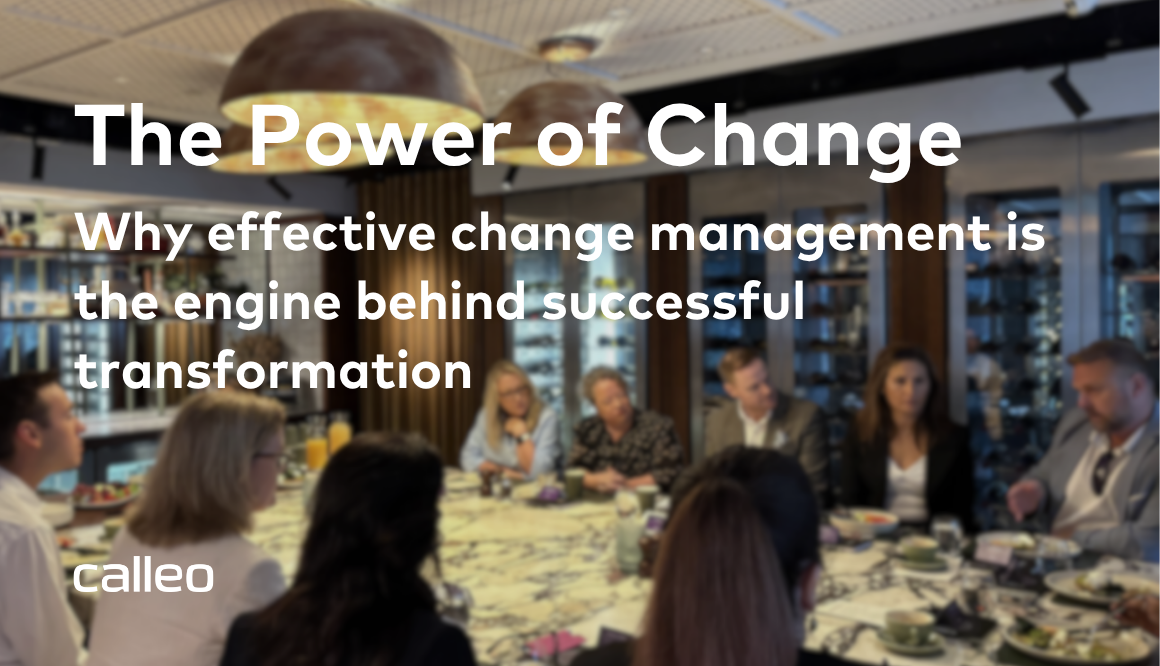
At Government Innovation WeekCalleo Managing Consultant Dom Jennings facilitated a roundtable with CIOs, Transformation Leads, and Delivery Specialists from across the Australian Public Service. Their conversation made one thing clear: leaders are being asked to deliver more change with fewer resources, lower risk appetite, and greater public scrutiny.


Stabilise First, Then Transform

For many agencies, transformation is happening against a backdrop of continuous change. Structures shift, ministers rotate, and teams are asked to absorb yet another program before the last one has settled.


Several leaders warned that pushing new initiatives into an already fatigued workforce is not strategic. It is destabilising. In an environment where public servants often stay for many years, long-running change cycles carry a cumulative emotional load.


Stabilisation emerged as a valid leadership choice. It can mean slowing momentum so people can regroup, consolidating what already exists, or pausing lower-value activity so core services stay strong. Leaders who ignore this risk burnout; leaders who respect it build resilience.


Risk Aversion as a Strategic Strength

While AI dominated the broader conference, this group was far more cautious. A Senior Data and Analytics Manager argued that government should deliberately move slower than the private sector when adopting new technologies.


The reason being that the government cannot afford high-profile failures. A flawed system rollout can disrupt payments, expose citizen data, or damage trust that takes years to rebuild.


Instead of chasing the latest tools, attendees leaned toward a watch-wait-adopt model. Let the private sector break things first. Learn from those failures. Then move when the technology is proven and the risks are understood. In a cost-constrained environment, patience becomes a strategic asset.


Building Adaptable Foundations, Not Fixed Solutions

Another challenge discussed was the tension between multi-year programs and ever-shifting policy settings. Too often, delivery teams are told to proceed quickly even when legislation or policy frameworks are still unclear.


Leaders at the roundtable described a shift toward modular, phased transformation. Breaking programs into smaller, adjustable components reduces financial exposure and allows technology to flex when policy or direction inevitably changes.


This mindset also demands better contract management. Stronger procurement discipline protects agencies from being locked into oversized, misaligned solutions and gives leaders more room to pivot when required.


Adaptability, not size, is becoming the marker of well-designed transformation.


Depth Over One-Stop Vendors

There was a clear preference from several agencies for specialist partners rather than large consultancies offering broad, end-to-end solutions. Smaller firms with focused expertise were seen as easier to manage, more transparent, and better aligned with agency priorities.


One CIO described building a “mini panel” of trusted specialist partners, each selected for specific capability gaps. This created competitive tension amongst vendors, sped up procurement, and provided far more control over deliverables.


The takeaway was that diversity of partners protects agencies from over-reliance and ensures quality in each slice of the transformation portfolio.


Simplification Before Prioritisation

While many agencies talk about prioritisation, the roundtable agreed that simplification is the step leaders usually skip. Large programs accumulate over years. Projects continue because no one has paused to ask whether they still add value.


One Transformation Lead described conducting a critical review of every initiative across their organisation. By looking at actual return on investment rather than historical momentum, they created a clearer picture of what to protect, what to scale, and what to retire.


Sometimes leadership means backing the right projects. Other times, it means having the discipline to stop the wrong ones.


Business-Led Delivery, Not Vendor-Led Delivery

Another recurring theme was the need for internal SMEs and business owners to drive transformation direction. When vendors control the narrative, solutions tend to expand, budgets drift, and features accumulate that do not serve the organisation.


Roundtable attendees emphasised that business context must anchor delivery. Technology teams translate that context into realistic architecture and delivery plans. Vendors then execute within those boundaries.


This internal ownership model results in solutions that fit, costs that stay contained, and capability that grows inside the agency rather than being outsourced.


Whole-of-Government Thinking

Identity management was used as a powerful example of fragmented investment. Each agency spending hundreds of thousands annually on separate identity solutions adds up to significant national waste.


Other countries have taken a platform approach, building open, reusable digital identity foundations that serve multiple services. The group noted that a similar path could work in Australia if culture shifts away from agency-specific systems toward shared foundations.

The challenge is not technology. It's the mindset. But the potential savings and efficiencies are substantial.


New Zealand, the United States, and the United Kingdom have all trialed whole-of-government approaches, with mixed results that offer valuable lessons.


The roundtable argued for studying these examples more closely - not to copy them, but to understand what works and what fails before committing large budgets domestically. There is no benefit in repeating avoidable mistakes when similar governments have already paid that price.


Calleo’s Take

The conversation confirmed what Calleo sees across the public sector: transformation is now a balance of simplification, disciplined prioritisation, and careful capability selection. Budgets are smaller, risk appetites are lower, and expectations are higher.


Calleo helps agencies navigate that reality by aligning people, partners, and delivery to what matters most.


If your organisation is managing tight funding, a heavy change portfolio, or pressure to do more with less, talk to us about how we can support practical, sustainable transformation that stands up under real-world constraints.


People Leadership in the Digital Era
by Gavin Campbell 24 November 2025
How government leaders can navigate AI anxiety, budget pressure and rapid change by building clarity, trust, strong guardrails and a future-ready workforce.
Navigating the Skills Shortage
by David Bain-Smith 23 November 2025
How government agencies can attract, retain and grow digital talent through collaboration, mobility, shared capability and a compelling purpose-driven APS brand.
David Bain-Smith presenting at the ACS Leadership Breakfast event in Canberra.
30 October 2025
Leadership drives true productivity. At the ACS Leadership Breakfast, experts showed how trust, adaptability, and culture power performance beyond technology.
Calleo team celebrating their ESG Award win and finalist recognition at the APSCo Awards 2025
by Iris Lamers 29 October 2025
Calleo wins the ESG Award and is named a finalist for Candidate Experience at the APSCo Awards 2025, recognising our leadership in ethical workforce solutions.
by Dom Jennings 4 September 2025
As the adoption of AI and cybersecurity technology accelerates, so too does the need for a workforce, policy environment, and infrastructure that can support it.
by Dom Jennings 20 May 2025
Cyber Summit 2025 – A New Era of Cyber Threats
by Gavin Campbell 26 March 2025
From Education to Employment
by Lakshmi Deepak and Joachim Motha 12 March 2025
The Shape of the Federal Market in 2025
by Dom Jennings 17 September 2024
Delivering Transformation in a Cost-Constrained Environment
More posts