The Hidden Cost of “Doing Your Own Notes” on APS Selection Panels

June 16, 2026   By Kate Gunn, National Scribe Manager

Across the APS, selection panel members are among the most diligent decision‑makers in government. They carry significant responsibility for ensuring recruitment and promotion decisions are fair, merit‑based and defensible. This work is often undertaken alongside demanding substantive roles, tight timeframes and heightened scrutiny.


Yet, one long‑standing practice remains largely unexamined: panel members taking their own interview notes while simultaneously assessing candidates.


Initially, this approach feels practical. Panels know the role. They understand the context. They’ve always done it this way. But when we view APS recruitment through the lens of risk, fairness and decision quality, the hidden costs of this approach becomes harder to ignore.


The cognitive load panels quietly carry

APS interview panels are asked to perform multiple complex tasks simultaneously. Panel members must listen carefully to candidates, assess responses against the relevant capability or work‑level standards, probe appropriately, compare candidates consistently and maintain accurate, contemporaneous records. Each of these tasks requires focus. Performing them all at the same time creates unavoidable cognitive strain.


When attention is divided between listening and writing, something gives. Important nuances in a candidate’s response may not be fully captured. Strong evidence can be reduced to shorthand. Panel members may momentarily disengage from the conversation while trying to keep up with note‑taking. None of this reflects poor intent or lack of capability, it reflects normal human limitations that recruitment processes rarely take into account.


Over the course of several interviews, these small degradations in attention can subtly influence how candidates are assessed and remembered, particularly in closely contested EL1 and EL2 panels.


When note quality shapes decision quality

A related and often overlooked issue is inconsistency. Each panel member typically records notes in their own style, with different levels of detail and emphasis. One may focus heavily on behavioural indicators, another on technical content, and another on overall impressions.


These differences often only become visible later, during moderation or report writing, when panels attempt to synthesise their views into a single, coherent narrative. In these moments, decisions can be shaped less by the evidence itself and more by how clearly that evidence was recorded. Detailed notes may carry disproportionate weight, while gaps in documentation can be misinterpreted as weaknesses in a candidate’s performance.


Where candidates perform at similar levels, as is often the case for internal APS recruitment and promotion, these inconsistencies matter. They influence how comparative merit is articulated and how confidently outcomes can be defended.


The real time cost emerges after the interviews

Panels often assume that doing their own notes is the quickest option. In reality, the time cost tends to surface later in the process.


Fragmented or incomplete notes require additional effort to interpret and align. Panels spend time reconstructing interview evidence from memory, reconciling differences in recollection, or reworking selection reports to ensure they accurately reflect what occurred. When candidates seek detailed feedback, panels may struggle to respond confidently if documentation is thin or uneven.


In more serious cases, insufficient records can increase exposure to review, appeal or probity concerns. The time, cost and disruption associated with these processes far exceed the effort required to put structured note support in place during interviews.


Procedural fairness depends on what can be shown

In APS recruitment, decisions are rarely questioned because of intent. They are examined for fairness, consistency and evidence. Panel notes are not simply written notes; they are formal records that demonstrate how merit was assessed and how candidates were treated.


When documentation is rushed or incomplete, panels may be confident they made the right decision but unable to demonstrate it clearly. This becomes particularly important at Executive levels, where candidates are experienced, well‑informed and more likely to seek comprehensive feedback or review. Robust records protect both the agency and the panel members involved.


How scribes change the dynamic, not the decision

Dedicated recruitment scribes do not remove decision‑making authority from panels. Instead, they remove a competing task.


When panels are freed from note‑taking, they are able to focus fully on listening, questioning and assessing candidates. Interviews become more conversational and responsive. Evidence is captured consistently, in a structure that supports moderation and reporting. Importantly, scribes record information without interpretation, ensuring that all evaluative judgements remain firmly with the panel.


The result is not a different outcome, but a clearer, more defensible pathway to that outcome.


A safeguard, not a convenience

At Calleo, we view scribing as a risk management function rather than an administrative task. In an environment where APS recruitment decisions are subject to increasing scrutiny and small process weaknesses can have significant downstream consequences. Expecting panels to carry avoidable cognitive load while also maintaining accurate records introduces avoidable risk into the recruitment process.


Best practice in APS recruitment continues to evolve. Processes that were once sufficient can become fragile as expectations around transparency and fairness increase. Selection panels are among the most important decision‑making bodies in the Federal Government, and supporting them appropriately is an investment in decision quality and organisational confidence.


Rethinking recruitment best practice

For agencies reviewing their recruitment processes, the question is not simply whether panels are capable, but whether the process itself reflects the realities of human decision-making.


Designing recruitment processes around human capability, rather than habit, is one of the most effective ways to reduce risk while improving outcomes.


Talk to us about safer APS recruitment

Calleo provides experienced, APS‑aware scribes who understand merit principles, procedural fairness and the realities of Federal Government recruitment and promotion. Our focus is supporting panels to make strong, defensible decisions without unnecessary burden.


If you are reviewing how your selection panels operate, or are looking to reduce recruitment risk, contact us at scribing@calleo.com.au.


Share article

Two women in blue and black blazers at a desk with text: “Create a Standout APS Application”
By Kate Gunn • September 7, 2026
Learn how APS applications are assessed, improve your pitch and interviews, and understand shortlisting from a scribe’s perspective in Federal hiring.

Text overlay on a conference photo asks if remote-first teams outperform co-located teams.
By Aiden McLean • August 17, 2026
Insights from The Great Debate 2026 on whether remote-first or co-located teams deliver better project outcomes, and what drives project success.
Recruitment panel discussion with laptop, overlaid text: “Building Confidence in APS Recruitment”
By Kate Gunn • June 14, 2026
Learn how strong panel records and scribe services support fair, compliant and defensible APS recruitment under the merit principle and FOI scrutiny.
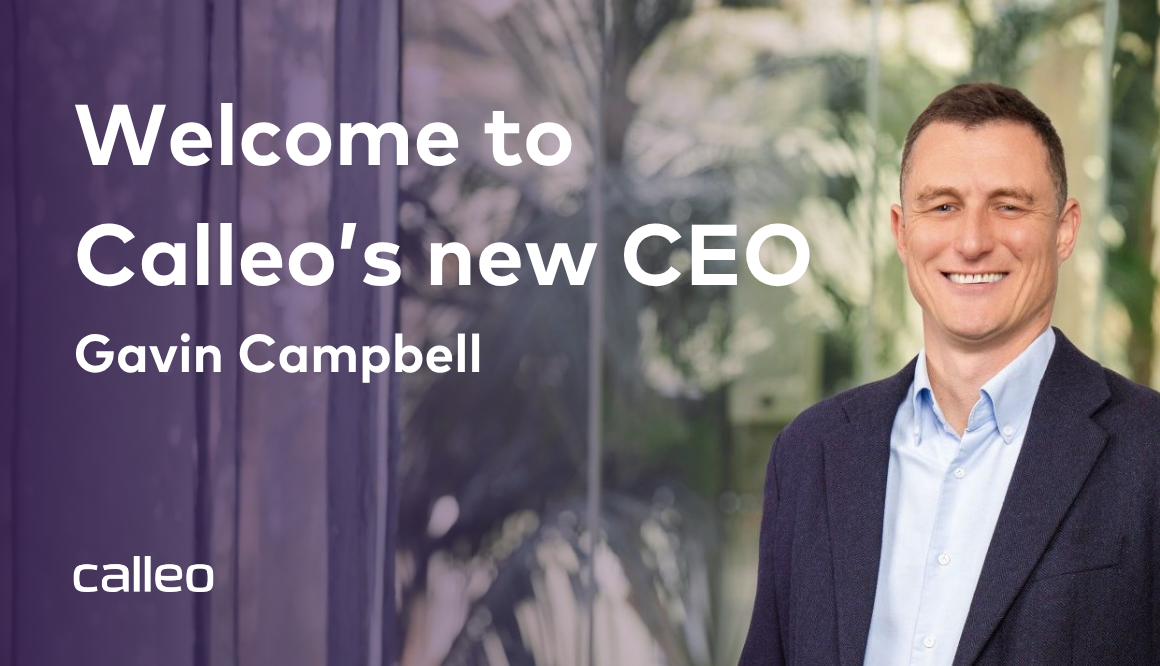
Welcome to Calleo’s new CEO, Gavin Campbell, on a purple banner with his portrait and company logo.
By David Bain-Smith • May 15, 2026
Gavin’s appointment as CEO is the right move for Calleo at the right time. As we enter our next phase of growth, we have in Gavin a leader who has earned the trust

Article title
By Kris Gale • April 28, 2026
Why effective change management drives successful APS transformation, with insights on leadership, adoption and change fatigue from senior government leaders.
Text reading
By Gavin Campbell • April 9, 2026
Practical guidance for entering federal government contracting, covering APS recruitment, selection criteria, AGSVA clearances and evaluation processes explained.