
Do Remote-first Project Teams Outperform Co-located Teams?

Insights from The Great Debate 2026

August 17, 2026   By Aiden McLean, Senior Consultant

The Great Debate 2026, hosted by The Project Management Collective and the University of Canberra, brought together students and industry professionals to tackle one of the most relevant questions facing project delivery today: do remote-first teams outperform co-located teams, or does proximity still provide a decisive advantage?


As organisations across government and industry continue to balance workforce flexibility, capability demands and delivery outcomes, the debate offered timely perspectives on what drives project success in an increasingly distributed world. Calleo was proud to be the event’s major event sponsor. 


The debate pitted a Student Team against an Expert Team, each arguing opposite sides of the motion.


The Teams

The Expert Team (Affirmative): Trish Gorman, Patrick O'Neill, and David Williams – who bravely stepped in from his coaching role to open as our first speaker!


The Student Team (Negative): Neeraj Ranade, Marion Elizabeth Macalalag, and Sahil Makheeja, coached by Helen McHugh.


Adjudicator Panel: Fiona Zheng, Garrie Irons, and Ben Coutts.


The Case for Remote-First

The Expert Team opened by arguing that remote working sharpens leadership discipline. Freed from the ability to manage by walking the floor, leaders are forced to define clear outcomes for their people and projects, prioritising results over visibility. That discipline extends to documentation, with the team stressing that remote teams need to record decisions, responsibilities, and handovers to stay accountable and effective.


One speaker drew on personal experience with Australian National Audit Office (ANAO) reviews to make the point that robust documentation is not just good practice but a determinant of continued project funding, pointing to a tier-one government program that sources personnel from across the country as a working example of remote and in-person collaboration done well.


The team then broadened the discussion to the advantages of accessing a national talent pool, highlighting improved engagement, stronger productivity and the ability to bring together specialised capability regardless of location. Periodic in-person sessions, they argued, can then be used intentionally for planning, alignment and relationship building.


The closing speaker reinforced this perspective with real-world examples of successful remote and co-located project environments, arguing that remote-first teams can draw on expertise from anywhere while still fostering psychological safety, accountability and diversity of thought. In their view, remote-first represents the model with the greatest future potential for collaboration and project outcomes.


The Case for Co-Located Teams

The Student Team's rebuttal set the tone early, describing idealised remote-first projects as closer to digital séances than high-performing engines. Their case rested on three pillars: knowledge transfer, stakeholder trust, and faster decision-making.


On knowledge transfer, the team argued that a meaningful share of organisational knowledge is tacit and cannot be fully documented, no matter how disciplined the handover process. That kind of knowledge, they argued, only moves effectively through in-person interaction.


The same logic extended to stakeholder relationships, with the team contending that trust and unwritten knowledge transfer occur more naturally in co-located environments, and that human interaction and emotional connection remain underrated drivers of project success.


Their strongest argument centred on coordination. Co-located teams, they argued, identify blockers and dependencies faster, reducing friction and delays in execution, while remote teams need more process and more steps to reach the same outcome, opening the door to inefficiency.


Proximity and familiarity were positioned as the deciding factors in both trust-building and decision speed, with co-located teams best equipped to respond when unexpected challenges or opportunities arise.


Adjudication and People's Choice

Adjudicators Fiona Zheng, Garrie Irons, and Ben Coutts judged the debate on matter, method, and manner, retiring to deliberate during the intermission. The audience also had its say, voting for the People's Choice Award via QR code throughout the break.


On the night, the adjudicators awarded the debate to the Expert Team, with their remote-first case judged strongest against the criteria. The audience told a slightly different story, with the People's Choice Award going to Sahil Makheeja of the Student Team, highlighting just how closely contested the discussion was.


The Takeaway

While the adjudicators ultimately found the case for remote-first project delivery more compelling, the debate highlighted that there is no universally correct model. Success depends less on where people sit and more on how teams are led, how knowledge is shared and how accountability is maintained.


For government agencies and delivery partners navigating large-scale transformation programs, the challenge is finding the right balance between access to talent, stakeholder engagement, organisational culture and delivery outcomes.


The debate reinforced a reality many project leaders already recognise: high-performing teams can be built in either environment, but they require deliberate leadership, strong governance and the right capability mix to succeed.


Looking Ahead

The future of project delivery is unlikely to be defined by a single working model. Instead, organisations will continue to balance flexibility, capability and collaboration in ways that reflect the needs of their people, stakeholders and programs.


For those working across project management and program delivery, the challenge remains the same: finding the right capability to deliver outcomes in increasingly complex environments. That's a conversation Calleo is privileged to have every day with professionals and organisations across the federal government sector. 


To learn more about how Calleo helps government organisations build high-performing project and program delivery teams, or to discuss opportunities across the federal government sector, get in touch with our team at hello@calleo.com.au.


Share article

Recruitment panel discussion with laptop, overlaid text: “Building Confidence in APS Recruitment”
By Kate Gunn June 14, 2026
Learn how strong panel records and scribe services support fair, compliant and defensible APS recruitment under the merit principle and FOI scrutiny.
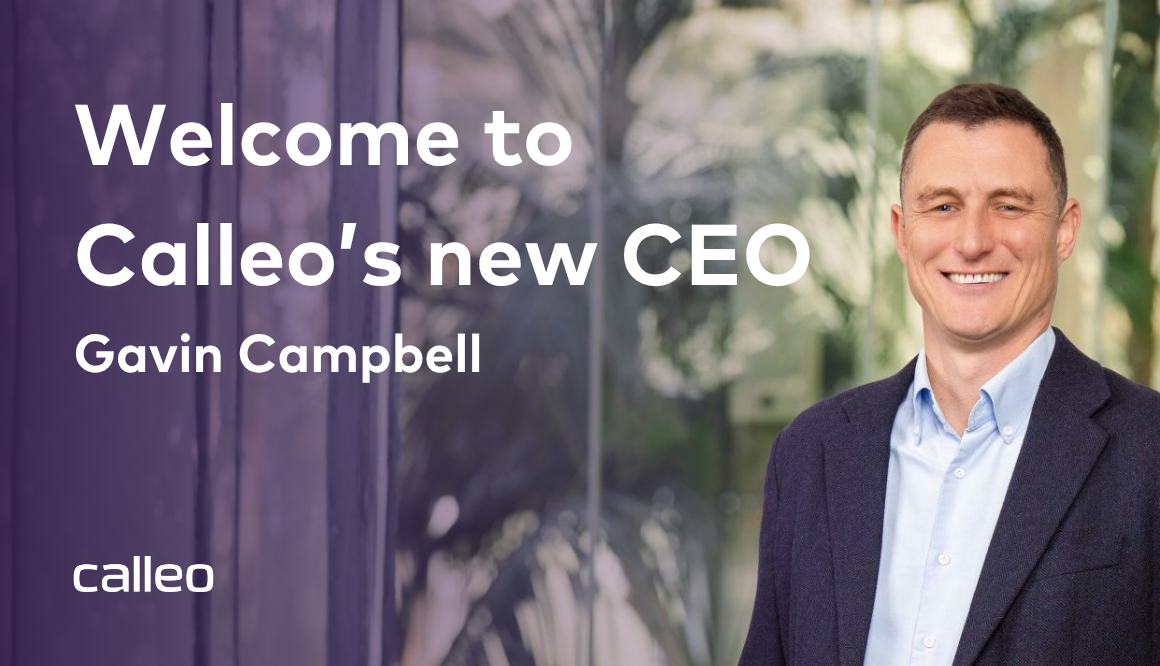
Welcome to Calleo’s new CEO, Gavin Campbell, on a purple banner with his portrait and company logo.
By David Bain-Smith May 15, 2026
Gavin’s appointment as CEO is the right move for Calleo at the right time. As we enter our next phase of growth, we have in Gavin a leader who has earned the trust
Article title
By Kris Gale April 28, 2026
Why effective change management drives successful APS transformation, with insights on leadership, adoption and change fatigue from senior government leaders.

Text reading
By Gavin Campbell April 9, 2026
Practical guidance for entering federal government contracting, covering APS recruitment, selection criteria, AGSVA clearances and evaluation processes explained.
A panel of speakers on stage before an audience, with the text overlay:
By Bradley Henschke April 8, 2026
Australia’s cyber skills gap isn’t a talent problem. Calleo’s Director of Cyber Bradley explores why pathways, not training, are key to building cyber capability.

Man in suit beside text:
By Bradley Henschke March 12, 2026
Calleo’s Bradley Henschke shares human‑centred insights on careers, leadership, AI, and the future of cyber in Australia.